BTC2Pay presents itself as a lightweight crypto exchange and payment service aimed at people who want to move between coins without opening a full trading account. It sits in the crowded instant swap end of the market, closer to SimpleSwap or ChangeNOW than to a conventional exchange such as Kraken. The appeal is obvious: choose a pair, send funds, and receive another asset. The problem is that a simple interface can make an operator look more established than it is.
The site is built around convenience rather than price discovery. There is no visible order book, no advanced spot terminal, and no realistic reason for an active trader to use it as a primary venue. BTC2Pay is for one off conversions, particularly when someone already holds crypto in a wallet and wants to change it quickly. That use case can be legitimate, but users should treat it as a service layer, not a place to leave funds.
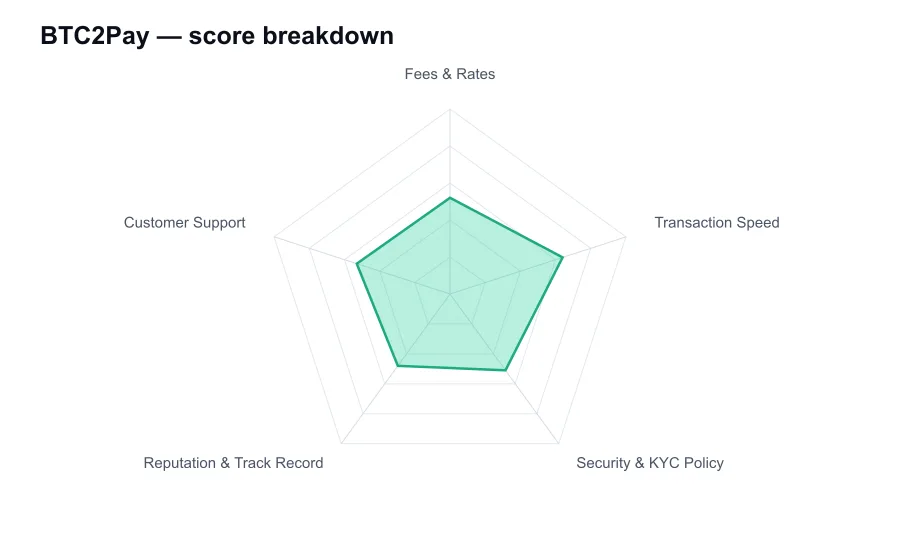
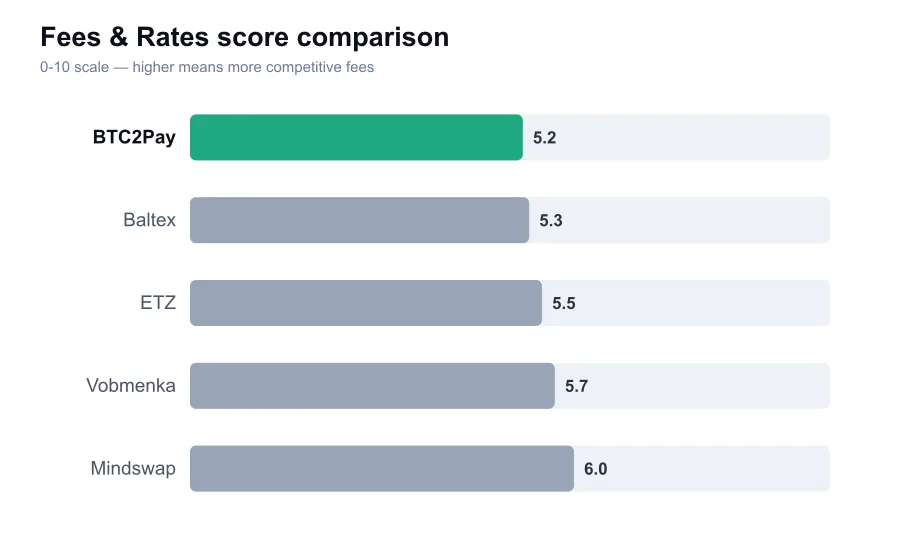
Fees are the first weak point. BTC2Pay does not give the kind of transparent, fixed public fee schedule that lets a customer compare its margin against named competitors before committing. With instant exchanges, the real cost usually appears in the quoted rate, plus network charges and liquidity provider spread. That can be acceptable if the quote is competitive, but it makes proper comparison harder than on a platform that says exactly what it charges.
My test for services in this category is simple: compare the final amount against a liquid centralised exchange and at least two instant swap sites at the same moment. BTC2Pay should be judged that way every time. A swap that appears fee free can still cost several percentage points through spread, especially on smaller tokens or during market stress. Major pairs tend to be less punishing, but the customer still needs to read the receive amount, not the promotional language.
Fixed rate and floating rate choices matter more here than they do on a standard exchange. A floating quote may look slightly better at first, but the final payout can move while confirmations arrive. A fixed quote offers more certainty, though the protection is normally priced into the rate and is only valid for a limited deposit window. Anyone sending an unusually large amount should get a small test transaction through first. It is basic crypto hygiene, and BTC2Pay does not remove the need for it.
Speed depends far more on the selected network, asset liquidity, and incoming confirmations than on the website's clean checkout screen. A common coin on a busy network can settle quickly once the deposit is credited. Bitcoin deposits, congested Ethereum transactions, or thinly traded assets can take much longer. The service is reasonable for ordinary swaps when conditions are calm, but it should not be used for a time critical trade where a missed price matters.
The best instant exchanges make transaction status easy to follow and explain whether an order is waiting for deposit confirmation, being exchanged, or being sent out. BTC2Pay's basic tracking approach is useful, though it does not offer the deeper operational transparency a serious user gets from an exchange account. If a transaction stalls, the distinction between a blockchain delay, liquidity issue, and compliance review becomes extremely important. This is where smaller services can feel opaque.
BTC2Pay markets a relatively low friction experience, which will appeal to privacy minded users. Low friction should not be confused with a guarantee that identity checks will never happen. Like most services touching third party liquidity and blockchain compliance tools, it can request documents or source of funds information if an address, transaction pattern, or asset triggers a review. That possibility should be understood before money is sent, not after an order is held.
The security picture is adequate at the transaction level but less reassuring at the corporate level. Users can protect themselves by verifying the destination address, avoiding browser extensions they do not trust, and sending only from a wallet they control. Yet the bigger concern is counterparty risk. BTC2Pay does not have the same public track record, regulatory visibility, or independently documented security history as established names such as Kraken, Coinbase, or Bitstamp.
That does not automatically make the service unsafe. It does mean the burden of caution stays with the customer. I found little that would justify trusting BTC2Pay with long term balances or very large conversions. The sensible pattern is to deposit for a specific swap and move the received asset to a self custody wallet after it lands. Any provider that does not need to hold customer funds for long should be used that way.
Reputation is where BTC2Pay remains a middle to lower tier choice. It has a recognisable brand and a functioning consumer oriented proposition, but it does not carry the long public history of a major exchange or the broad independent discussion that gives a reviewer confidence during disputes. Sparse public visibility is not proof of misconduct. It is, however, a reason to be stricter about transaction size and record keeping.
Support appears to be oriented around online tickets or chat rather than a robust account management operation. That is normal for this class of service, but it changes the experience when something goes wrong. Straightforward swaps may need no help at all. A flagged transaction, wrong memo, or delayed payout can become frustrating if replies are slow or scripted. Save the order ID, transaction hash, screenshots of the quote, and every relevant address before contacting support.
BTC2Pay has a place for users who value a straightforward swap flow and are prepared to compare rates themselves. It is not the low cost answer by default, and it is not a substitute for an exchange with transparent trading fees. The service works best for modest, uncomplicated conversions involving well supported assets. The less ordinary the asset or transaction, the less attractive its limited public transparency becomes.
My view is cautious rather than hostile. BTC2Pay can be useful as a transactional tool, particularly for someone who understands wallet transfers and does not expect institutional grade protections. Its convenience is real, but so is the lack of fee clarity and the thinner reputation record. Use it for a controlled swap, confirm the final receive amount, and withdraw immediately. For large sums, frequent trading, or customers who need dependable escalation, a better established exchange is the smarter choice.