Acechange is one of the smaller instant crypto exchange brands, aimed at people who want to swap one asset for another without opening a conventional trading account. It sits in the same broad category as ChangeNOW, SimpleSwap, and LetsExchange, but it doesn't have the market visibility, liquidity profile, or long public record of those larger services. That matters because the convenience pitch is familiar, while the evidence needed to trust the operator is thinner.
The site experience is built around a simple order form. Pick the asset you are sending, choose what you want back, enter a receiving address, and fund the quoted order. There is no order book to study and no advanced trading interface. That is a sensible design for a one-off wallet-to-wallet conversion. It is not a venue for anyone who needs limit orders, portfolio tools, recurring purchases, or sophisticated execution.
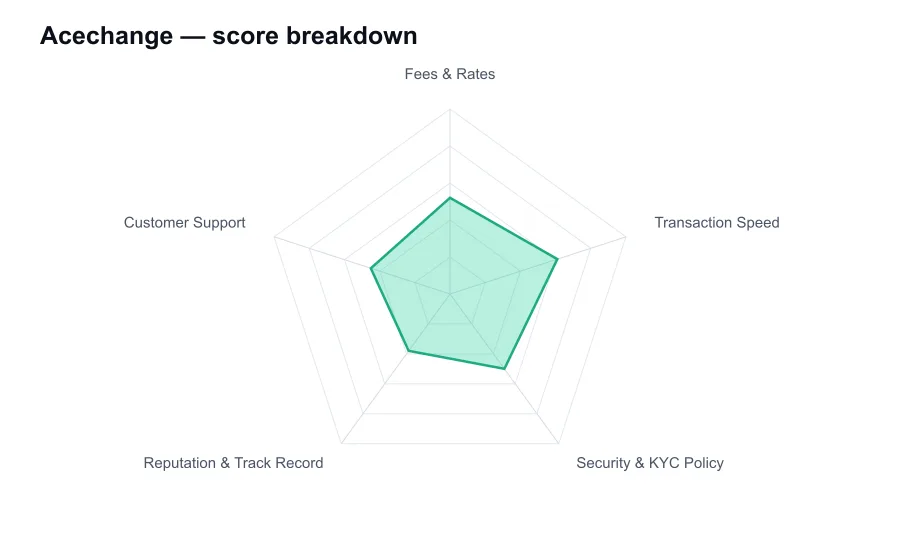
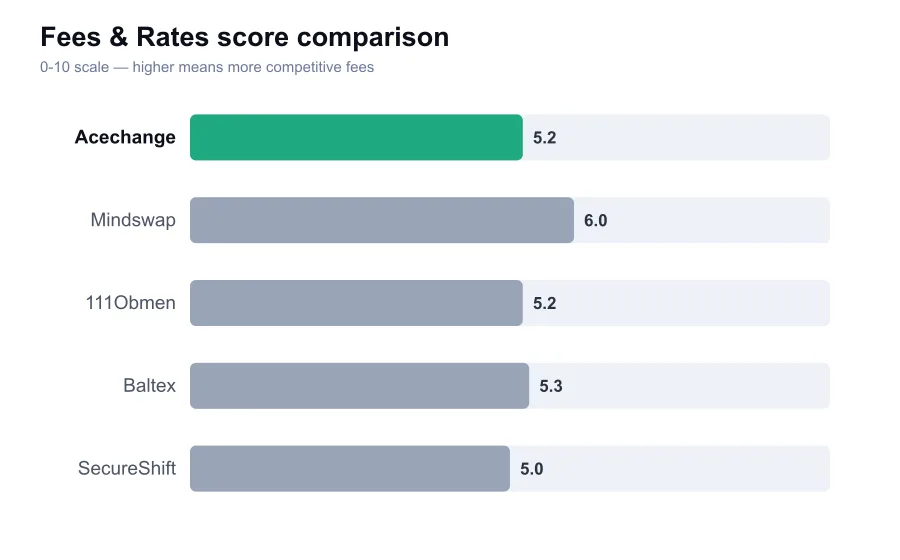
Acechange's fee presentation is the first area where I would slow down. Instant exchangers rarely charge in one neat, visible line. Their compensation can be folded into the exchange rate, liquidity-provider spread, and network charge. A quote that appears commission-free can still be noticeably worse than buying on a deep exchange and withdrawing yourself. The only meaningful comparison is the final amount delivered, not the number printed beside a word such as fee.
For small swaps, that pricing model can be acceptable. Paying a few dollars for a fast conversion with no account setup is often easier than moving funds through an exchange. For a larger BTC, ETH, or stablecoin conversion, the spread deserves real scrutiny. Open a quote at Acechange and compare the final receive amount with ChangeNOW, StealthEX, and a liquid centralized exchange at the same moment. If the gap is meaningful, convenience has become expensive.
Fixed-rate orders are generally preferable when the option is available because they reduce the risk of a moving market between deposit and payout. Floating-rate orders can work well in quiet conditions, but crypto markets are not reliably quiet. A volatile coin can move enough during confirmation that the original estimate becomes irrelevant. The customer needs to read which quote type is being accepted instead of assuming the number on the first screen is guaranteed.
Speed depends less on the checkout page than on the asset being sent. A USDT transfer on a busy network, an Ethereum transaction with insufficient gas, or a Bitcoin deposit awaiting several confirmations can delay everything. Once deposits clear and liquidity is available, instant exchanges normally complete straightforward orders in minutes. That is the best case, not a promise that every transaction will land at that pace.
The operational weakness of a smaller exchange service appears during exceptions. A normal swap is easy to automate. A deposit sent on the wrong network, an underpaid miner fee, a token contract issue, or an AML hold needs people who can investigate it. Larger firms have more visible support structures and a larger base of public case histories. Acechange offers less reassurance here because independent documentation of how it handles difficult cases is limited.
Its privacy positioning should not be confused with immunity from compliance checks. A service may permit an order to be created without a full account registration, yet still request identification if blockchain monitoring or a liquidity partner flags the transaction. That is common across the non-custodial exchange market. Anyone using funds that could trigger sanctions, fraud, or stolen-fund screening should expect a KYC request and should not send money they cannot afford to have paused.
Security also starts with the user. Acechange does not remove the irreversible nature of a blockchain transfer. Double-check the destination network, use a self-controlled receiving wallet, and never accept support instructions from social-media impersonators. A legitimate support agent does not need a seed phrase. This sounds basic, but instant-exchange users are common targets because they are already moving assets under time pressure.
The brand's limited public footprint is its main reputational handicap. I would not equate a lack of famous scandals with a long-established reputation. Those are different things. There is simply less external material to examine, fewer detailed independent reviews, and less clarity around the company than buyers get from mature European brokers or global names such as Kraken and Coinbase.
That doesn't prove Acechange is unsafe. It does mean the burden shifts to the customer to use sensible limits. Test the route with a modest order first. Save the quoted rate, order ID, transaction hashes, and correspondence. Do not make a large first transfer merely because the interface looks polished. In crypto, an attractive front end is not evidence of reserves, compliance quality, or reliable dispute handling.
Support appears to be centered on ticket or chat-style assistance rather than a substantial public service operation. That can be enough for common questions, especially if an order has a clear tracking page. It is less comforting for a delayed transaction where the sender needs a precise explanation, a named escalation route, and a response before a market move gets worse. I would want to test response quality with a basic pre-sale question before relying on the service.
Acechange makes the most sense for an experienced wallet user who understands networks, checks quotes, and wants a modest swap without creating another exchange account. It is a poor choice for first-time buyers, users who need fiat deposits, or anyone converting a sum where a delayed compliance review would be damaging. Those people are better served by a regulated broker with established customer-service channels.
My view is cautious rather than dismissive. Acechange may do the simple job its interface promises, but it has not earned the same degree of confidence as the best-known instant exchangers or regulated platforms. Treat the quoted output as a price to verify, treat no-registration access as conditional, and keep initial transactions small. The convenience is real, but the reputational discount is real too.