MindSwap was part of the early multi-chain DeFi wave, best known for automated market making and ecosystem products associated with Moonriver and related networks. It was never a mainstream centralized exchange with bank transfers, deep order books, and a large compliance operation. It was a decentralized swap interface, aimed at users willing to connect a wallet, bridge assets, provide liquidity, and accept the risks that come with smaller blockchain ecosystems.
That context explains both its appeal and its limitations. On a low-fee network, a decentralized exchange can make small token swaps far more practical than doing the same thing on Ethereum mainnet. There is no account approval queue and no need to hand over identity documents for a basic wallet-to-wallet trade. For users who were active in Moonriver-era DeFi, MindSwap offered familiar tools in an environment where major centralized exchanges did not always list local ecosystem tokens.
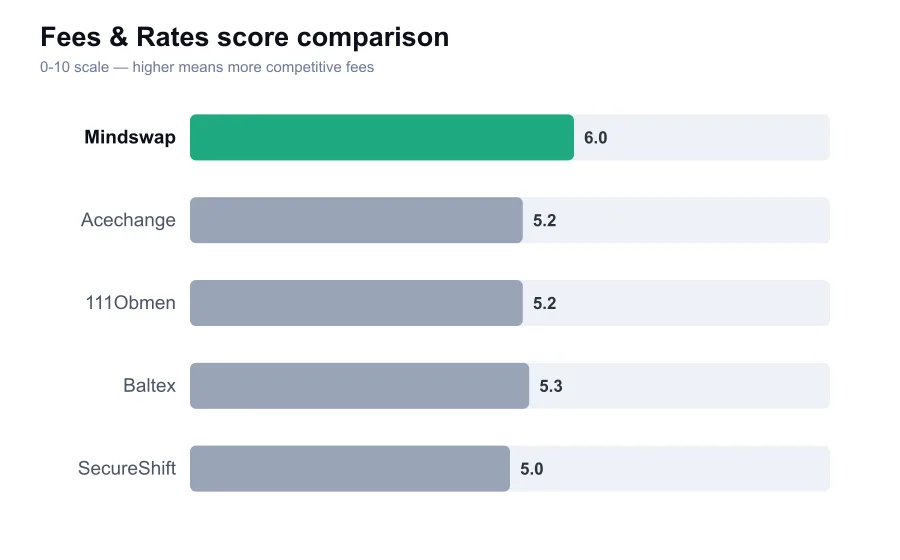
The problem is that a DEX's fee is only one component of execution quality. Automated market makers typically apply a pool fee, but the user also pays network gas and, more importantly, slippage. In a deep USDC or wrapped native-asset pool, the cost can be manageable. In a thin long-tail token pool, price impact can rapidly overwhelm any low displayed fee. A trader swapping a meaningful amount should inspect liquidity and price impact before approving anything.
MindSwap did not have the scale or liquidity moat of Uniswap, Curve, PancakeSwap, or even the larger deployment of Sushi. That matters because liquidity is the real product. A clean interface cannot compensate for a pool with limited reserves or a token with only one fragile market. Small venues often look cheap for a tiny test trade, then become expensive once the order size rises. The right comparison is the final amount received, not the fee percentage alone.
Transaction speed depends heavily on the underlying chain and the state of wallet infrastructure. Moonriver transactions have generally been much faster and cheaper than Ethereum mainnet, often confirming in seconds or a few minutes rather than the longer waits and high costs associated with congested Ethereum periods. But a fast confirmation does not repair a bad trade. Once a swap executes at a poor rate, there is no customer service agent who can undo it.
Cross-chain activity adds another layer. Moving funds through bridges can take longer, introduce separate fees, and expose users to bridge-specific smart-contract or validator risk. Many people focus on the speed of the final swap and underestimate the journey required to get the asset onto the network in the first place. For a small purchase, bridging costs and complexity can make the whole exercise irrational compared with using a large exchange or a DEX on a more liquid chain.
Security at MindSwap should be understood as a stack of risks. There is the protocol contract, the blockchain, the wallet extension, the bridge, the token contract, and the user's own approval habits. A DEX does not custody funds in the same way as a centralized exchange, which eliminates one category of counterparty risk. It also shifts responsibility to the user. Signing a malicious approval or interacting with a fake frontend can expose a wallet without any recovery path.
No-KYC access is one of the genuine attractions of a permissionless swap interface. A wallet can generally interact with a protocol without opening a traditional account, subject to interface restrictions and applicable laws. That privacy comes with no consumer-style account recovery, no chargebacks, and no formal dispute process. Users should distinguish between a protocol being permissionless and a transaction being safe. Those are completely different claims.
MindSwap's reputation has faded with the broader cooling of the smaller Moonriver DeFi scene. A project can be technically functional yet still lose relevance if liquidity providers move elsewhere, developers stop shipping, or the community's attention evaporates. In crypto, abandoned liquidity is a practical danger. Old pools can remain visible long after they stop being sensible venues for trading, and old links can become phishing targets.
I would be especially cautious about token listings and farms tied to legacy DeFi brands. Incentive rewards can attract capital quickly, but they can vanish just as quickly once emissions decline. Yield from a liquidity pool also comes with impermanent loss, token volatility, and smart-contract exposure. It is not comparable to a guaranteed rate. Anyone who cannot explain why a pool's two assets might diverge should not provide liquidity there.
Support is limited by design. Community channels, documentation, and social accounts may help identify a known issue, but they are not a safety net for an erroneous transaction. This is not a criticism unique to MindSwap. It is a fundamental DEX tradeoff. Still, a smaller and less active project leaves users with fewer people to ask and fewer current guides to follow, which makes basic tasks more difficult than on Uniswap or PancakeSwap.
For traders determined to use MindSwap, the sensible routine is boring but essential. Confirm the current official frontend through trusted ecosystem sources, use a separate wallet with limited funds, check the token contract from more than one source, review approval requests, and begin with a small swap. Do not use a search-ad link. Do not approve unlimited spending unless there is a compelling reason. Do not assume an old tutorial reflects the current state of the protocol.
MindSwap has some historical value as an example of how DeFi expanded into smaller EVM-compatible networks. Its fee-light, wallet-first model was useful for the users who needed it. Today, however, the market has moved toward chains and DEXs with deeper liquidity, broader developer support, and more actively maintained tooling. That makes the platform a specialist option at best, not a default exchange recommendation.
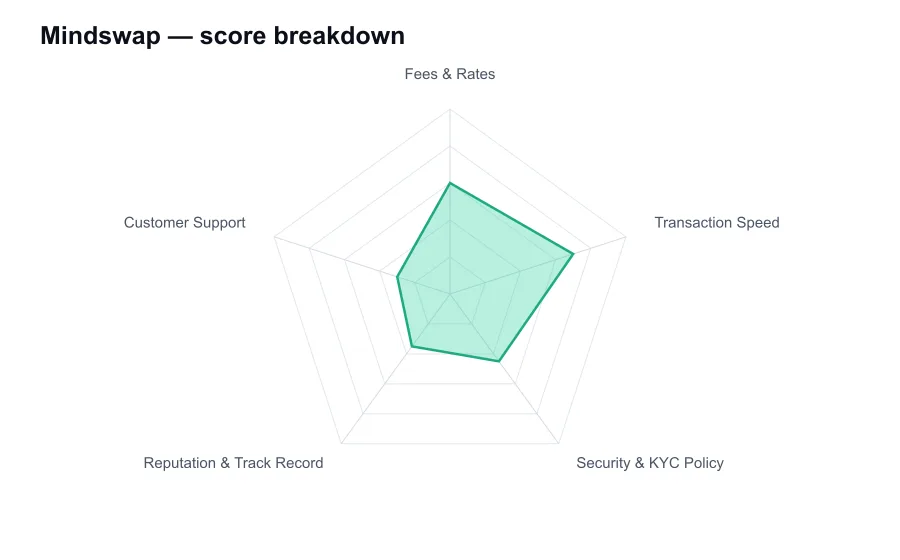
My verdict is cautious and fairly negative for new users. MindSwap may still be relevant for a specific legacy asset or a user already embedded in its ecosystem, but it lacks the liquidity, support depth, and current market standing needed to compete with leading DEXs. Privacy and fast low-cost confirmations are real positives. They do not outweigh the practical risk of thin pools, aging infrastructure, and minimal recourse if a trade goes wrong.