1inch is not a conventional crypto exchange. It is a decentralized-finance aggregation network that searches liquidity across decentralized exchanges and routes a trade through one or more pools to seek a better execution price. That distinction matters. You normally trade from your own wallet, not from a custodial account held by 1inch, and the experience is built for onchain users rather than people buying their first bitcoin with a debit card.
The product has grown beyond a simple DEX aggregator. Its main interface offers aggregation and routing, while Fusion allows users to sign an order that resolvers fill, often without the user paying gas directly in the familiar way. 1inch also offers limit-order infrastructure and a wallet product. It is a serious piece of DeFi plumbing, not a tiny swap widget with a catchy name.
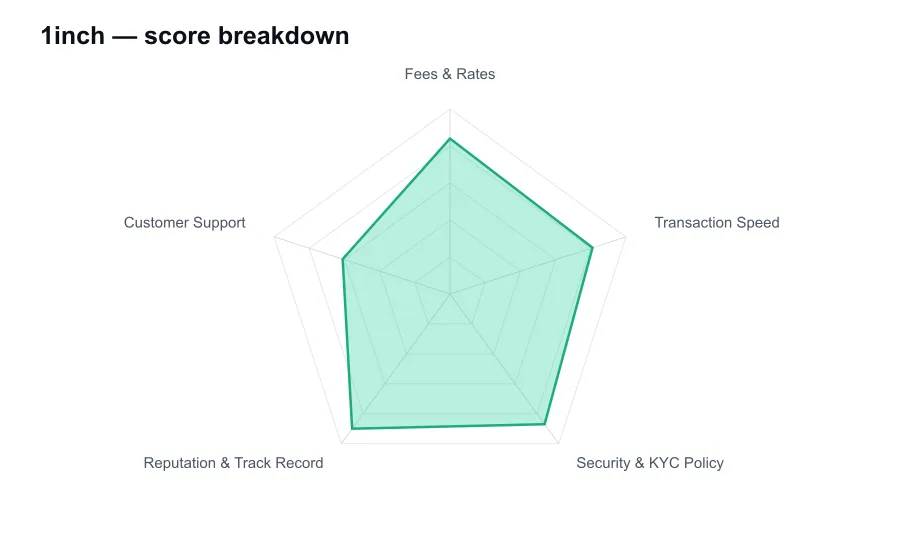
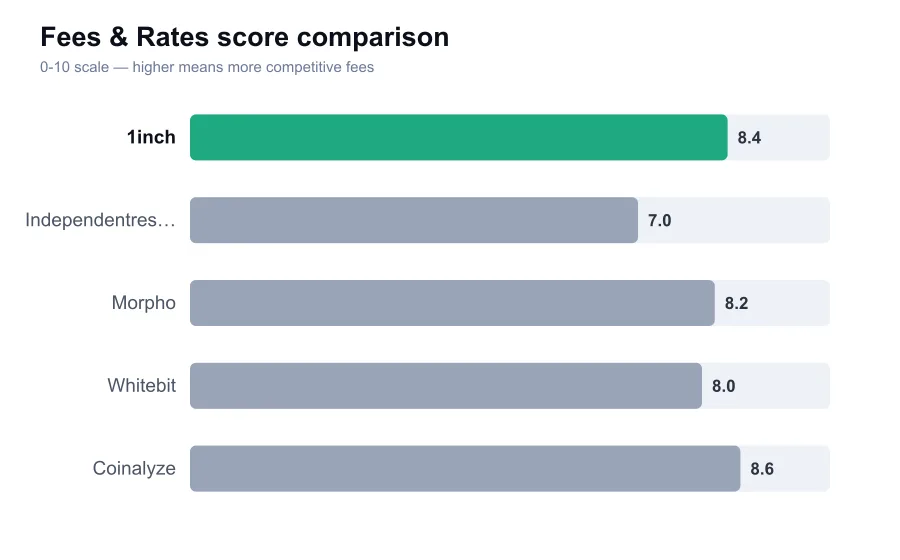
Fees are one of 1inch's strongest points, but they need to be explained honestly. The protocol generally does not charge a standard retail trading commission on a Classic swap. You still pay the liquidity provider fees built into the pools you touch, plus gas on the relevant blockchain. If the route crosses several pools, the effective cost can be more complex than the clean headline suggests.
For modest Ethereum mainnet trades, gas can overwhelm any saving from superior routing. A user swapping $100 of tokens may find that a centralized exchange is far cheaper after network costs. On networks with lower fees, such as Polygon, Arbitrum, Optimism, Base, or BNB Chain, the economics become far more attractive. 1inch is best judged by the final transaction preview, not by the idea that decentralized trading is automatically cheap.
Fusion changes the calculation. The user signs an intent and a resolver competes to execute it, with gas costs handled through the execution model rather than paid as a separate wallet transaction in many cases. That can make trades feel pleasantly simple and can protect users from some failed-transaction frustration. The trade-off is that execution quality and timing depend on resolver liquidity, the selected parameters, and market conditions.
1inch's routing engine is genuinely useful for liquid token pairs and larger swaps. Splitting a trade among venues can reduce price impact compared with going directly to one automated market maker. Still, no aggregation algorithm can manufacture liquidity. Thin tokens, volatile markets, and obscure chains can produce ugly slippage, failed routes, or prices that look better before a transaction than after every cost is counted.
Speed is normally blockchain speed, not a centralized exchange matching engine. A Classic trade settles once it is included and confirmed onchain. On fast networks that can feel close to immediate, while Ethereum mainnet can be slower and more expensive during congestion. Fusion may remove the gas-management burden, but it is not a promise that every signed order will fill instantly.
Security is strong by DeFi standards, though that phrase should not be mistaken for risk-free. 1inch's smart contracts and core systems have undergone audits and have faced years of meaningful public use. Its noncustodial model is a major advantage because the protocol does not hold your private keys or maintain a giant customer deposit pool that can be frozen, mismanaged, or hacked in the centralized-exchange fashion.
The risk shifts to the user. A malicious token approval, a fake 1inch site, a compromised wallet extension, or a careless signature can cause serious losses. Token approvals deserve particular attention. Revoke allowances you no longer need, verify the domain, use a hardware wallet for material balances, and read the wallet prompt instead of clicking through it. The protocol can be well built and still be unsafe in careless hands.
1inch's consumer-facing swap tools do not generally demand traditional KYC for ordinary onchain use. That is valuable for privacy-conscious users. It does not mean every linked service is permissionless, however. Fiat ramps, third-party bridges, regulated front ends, and jurisdictional restrictions can bring identity checks or access limits. Don't confuse a self-custody swap protocol with a promise of universal anonymity.
Its reputation is excellent within DeFi. 1inch has operated through multiple market cycles, is widely integrated, and has a recognizable development organization and community. It belongs in the same serious conversation as Uniswap's interface, CoW Swap for intent-based execution, and Paraswap for aggregation. The 1INCH token itself is a separate investment question, and owning it should not be confused with receiving a claim on exchange revenue.
Support is the weak spot, although that is common in decentralized products. There isn't a conventional account-support desk that can reverse an onchain trade, recover a wrong address, or unlock a forgotten password. Documentation, community channels, and official social accounts can help with product questions. They cannot rescue funds from a completed transaction or correct a signature you authorized.
For experienced self-custody users, 1inch is often one of the best default places to check a swap quote. I particularly like it for comparing routes on lower-cost networks and for users who understand approval management. It is less suitable for beginners who want phone support, simple tax statements, guaranteed fiat withdrawals, or a party that can undo an error.
A sensible workflow is to compare the 1inch quote with direct pool execution, a centralized exchange withdrawal route, and an intent-based competitor such as CoW Swap for larger Ethereum trades. Set a realistic slippage tolerance, avoid trading during obvious volatility, and do a small test if you are interacting with an unfamiliar asset. Never approve unlimited spending merely because a token is popular.
1inch earns a high score because its core product solves a real execution problem and does so without taking custody. It isn't the cheapest answer in every circumstance, and it asks users to carry more technical responsibility than a normal exchange. For the right user, that is a fair bargain. For somebody who wants a bank-like service, it is plainly the wrong tool.