Changelly is one of the best-known names in instant crypto exchange. Founded in 2015, it predates a large share of the wallet-swap and aggregator services now competing for the same users. Its core proposition remains simple: exchange one cryptocurrency for another without learning a full trading terminal. Changelly has also expanded beyond bare swaps with fiat purchase options, DeFi access and business integrations. That maturity gives it visibility, but it has also accumulated enough user history to deserve a harder look than newer rivals.
The service works as an intermediary and liquidity aggregator. You choose an asset, amount and destination wallet, then Changelly supplies a route and deposit address. It is not a conventional exchange where you can study an order book or place limit orders. For someone converting coins in self-custody, that can be ideal. For someone trading frequently, it is usually an expensive compromise. Convenience is the entire product, and the cost of convenience appears in the exchange rate.
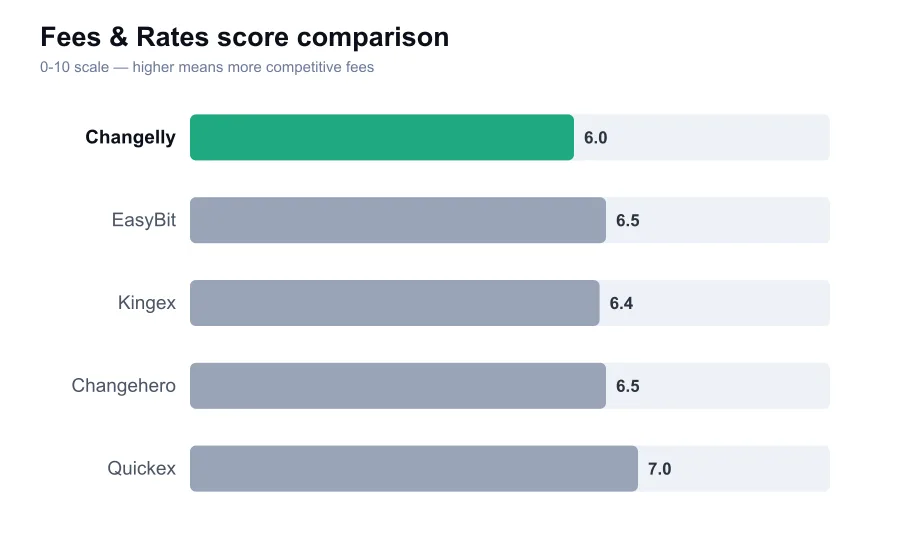
Changelly has long advertised a 0.25 percent fee for floating-rate crypto-to-crypto exchanges. That figure is more concrete than the vague fee language used by some rivals, but it is not the whole bill. The rate delivered by an external liquidity provider can contain a spread, and blockchain fees still apply. A user comparing the final amount to a deep spot market may find the effective difference is higher than 0.25 percent. This is especially true on illiquid pairs or fast-moving markets.
The fixed-rate product is more complicated. Changelly charges variable terms for fixed exchanges because it is absorbing price movement and securing liquidity for a limited period. It does not make sense to expect the same 0.25 percent structure as a floating swap. The upside is clear: you know the amount you should receive if you fund the order within the deadline. For larger transactions, this is often a more honest way to buy certainty than hoping a floating quote remains favorable.
On major routes, Changelly is not automatically poor value. It has broad asset support and access to multiple liquidity sources, so its quote can occasionally beat a competitor's. But the only responsible habit is comparison shopping. Check ChangeNOW, ChangeHero, SimpleSwap and, where practical, the price of selling and buying through a major exchange. Changelly is rarely the service I would select without looking at the output amount first. The brand name should not replace a thirty-second quote comparison.
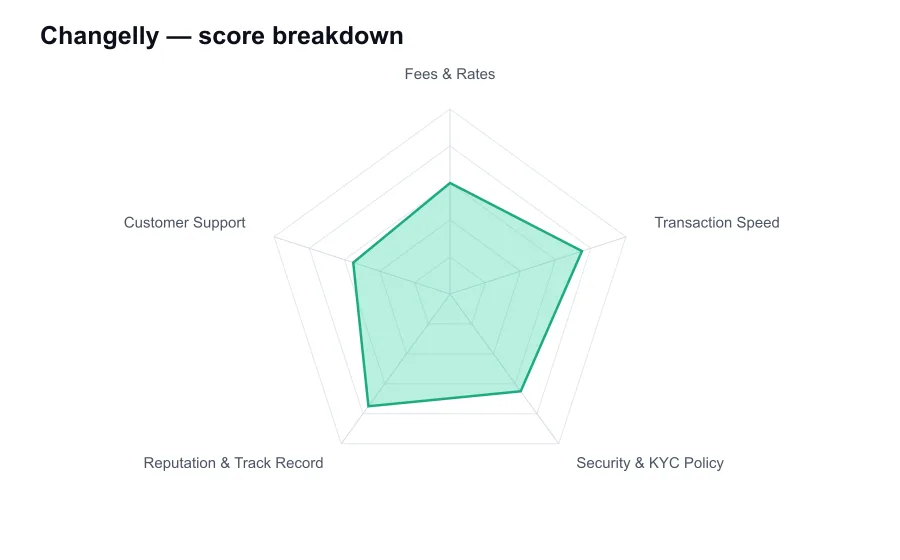
Its speed is usually respectable. Fast-chain swaps can arrive within several minutes, while Bitcoin and Ethereum transfers commonly require more patience. A normal expectation for many conversions is five to thirty minutes, although network congestion, wallet maintenance and required deposit confirmations can extend that significantly. Changelly provides status tracking, which is useful, but customers should understand that the provider is coordinating several moving parts. A delay in a third-party liquidity route is still a delay from the user's perspective.
Fiat purchases deserve extra caution. They are commonly handled through third-party payment partners and can involve card fees, regional restrictions, additional verification and less attractive exchange rates than crypto-only swaps. The convenience is real for somebody making a small first purchase, but card crypto purchases are rarely cheap. I would not use Changelly's fiat gateway as a primary on-ramp without comparing it with a regulated local exchange, especially if a bank transfer option is available.
Changelly is non-custodial in the limited, practical sense that it does not ask users to leave an ongoing trading balance on its platform. Your coins are sent for the specific conversion, and the output heads to the wallet you provide. That is much healthier than treating a swap service as storage. Still, it is not a decentralised protocol. During execution, Changelly and its partners control the process. A user must trust the site, the quote, the routing and the claims process if something goes wrong.
KYC is another area where marketing shorthand causes trouble. Changelly does not normally require a registered account for every crypto exchange, but it applies AML procedures and may request identity documents for transactions deemed risky. Users have publicly complained about funds being held while reviews take place. Some complaints may involve legitimate blockchain-risk signals, but the customer experience can still be poor when timelines are unclear. Anyone needing guaranteed privacy or immediate access to funds should not rely on Changelly.
This is the central reputational weakness. Changelly's long history, wide recognition and numerous integrations make it far more credible than an anonymous swap website. Yet its name is also frequently associated with complaints about compliance holds and hard-to-resolve support cases. The company is not unique here, but it is not exempt either. A platform that advertises frictionless exchanges has a higher obligation to explain what happens when an exchange becomes anything but frictionless.
The company has weathered multiple market cycles, which matters. Plenty of crypto services were fashionable for a year and then vanished. Changelly has maintained a large asset catalogue and partnerships through bull and bear markets. That does not make every transaction risk-free, nor does it substitute for regulatory protections available at some established exchanges. It does mean the service has a more substantial track record than many instant-swap competitors, and that history earns it a respectable reputation score despite the recurring complaints.
Support is available through its help center and customer channels around the clock. Routine questions about transaction status are usually easier to handle than disputed rates or AML cases. The practical quality of support depends on whether the agent can get a useful update from a partner rather than merely repeating that the case is under review. Keep every transaction ID, original quote, timestamp and blockchain hash. Those details matter if you need to escalate, and vague descriptions will slow the process further.
I would use Changelly for an occasional, modest swap where its payout is competitive and I want access to a token without opening another exchange account. I would choose fixed rate for a volatile conversion where the final amount matters. I would not use it for large sums that require certainty, for frequent trading, or for funds with any chance of raising blockchain-compliance questions. The service is established, but established does not mean frictionless in every edge case.
Changelly remains a legitimate and useful part of the crypto exchange landscape. Its breadth, brand recognition and straightforward workflow are genuine strengths. Its effective pricing is not always as low as the 0.25 percent headline suggests, and the KYC escalation risk prevents a stronger security and support recommendation. Think of it as a convenience layer above crypto markets, not as the market itself. If you understand that distinction and compare quotes, it can serve you well.