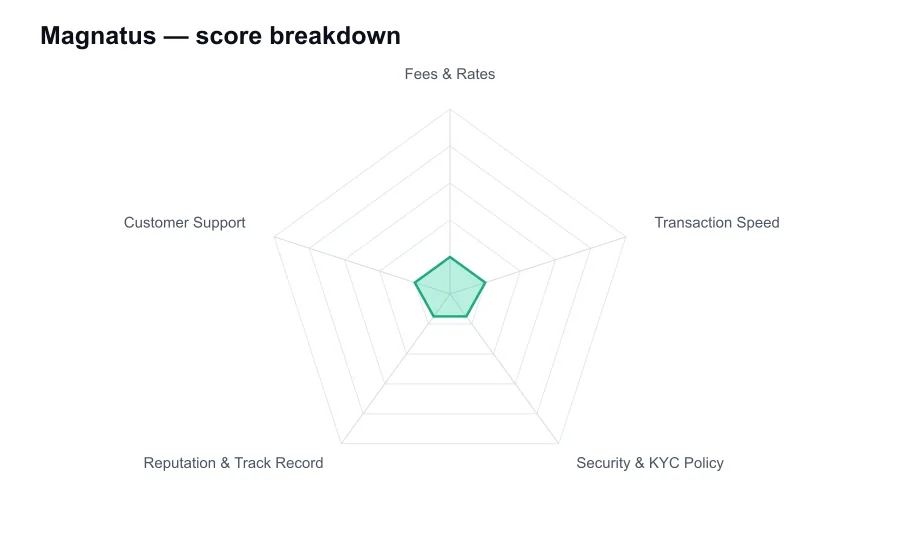
Magnatus presents a difficult case for anyone trying to review crypto trading venues responsibly. It has appeared in exchange directories and search results, but it does not have the visible operating footprint expected from a serious retail exchange. I could not establish a durable public record of regulated operations, audited reserves, named leadership, or a consistently maintained trading platform. That absence is not a minor inconvenience. It is the central fact a prospective user needs to weigh.
The first question should be whether Magnatus is an active exchange at all, rather than whether its quoted prices look attractive. Smaller crypto brands often retain old listings after a product has changed, gone quiet, or disappeared. A functional website alone would not settle that question. Users need current trading pairs, transparent terms, current legal documentation, a working withdrawal process, and recent independent reports from people who have actually used the service.
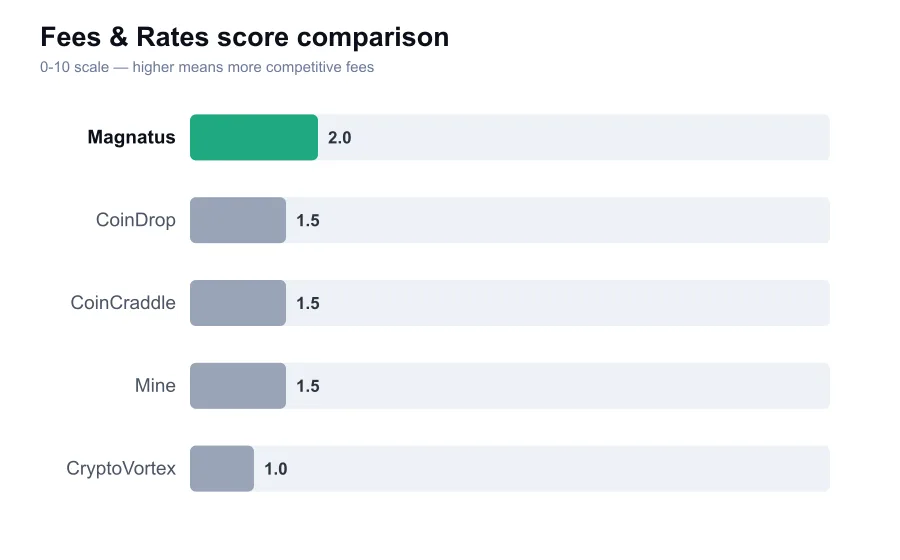
There is no dependable published fee schedule that I would treat as authoritative for Magnatus. That makes it impossible to give the platform credit for low fees simply because a directory once described it as cheap or commission-free. A trading fee is only one part of the bill. Spread, withdrawal charges, minimum withdrawal rules, network-fee handling, and price slippage can cost far more than a headline maker fee.
For an active trader, this lack of disclosure is a deal breaker. Binance, Kraken, Coinbase Advanced, and even many smaller regional exchanges publish trading tiers and withdrawal pricing in enough detail that a user can estimate costs before funding an account. With Magnatus, a customer may be forced to discover the true cost after sending funds. That reverses the proper order of trust. Never deposit first just to find out what an exchange charges later.
Speed is equally hard to judge without verifiable operational data. Crypto transfers themselves can be fast, but an exchange can delay the useful part of the transaction through manual review, wallet maintenance, thin liquidity, or withdrawal queues. Claims such as instant deposits or rapid withdrawals mean little if there is no evidence of consistent settlement during busy market conditions. The relevant measure is completed withdrawal time, not the time shown on a confirmation page.
A thin venue can also create a deceptive kind of speed. An order may appear to fill instantly because the platform is acting as the sole counterparty, because the order book is shallow, or because the displayed quote is not genuinely executable at size. That is particularly dangerous for less experienced buyers who focus only on the price on screen. Before using Magnatus for any meaningful amount, users would need to test a small deposit, trade, and withdrawal from start to finish.
Security is where uncertainty becomes more serious. I could not verify public proof-of-reserves reporting, custody arrangements, independent penetration testing, a bug bounty program, or clear details about how customer assets are segregated. No exchange is risk-free, including major names, but established operators usually provide a substantial amount of security documentation. A platform that asks users to trust it while revealing almost nothing deserves a low security assessment.
The same caution applies to identity checks. A no-KYC claim can sound appealing, especially to privacy-minded traders, but it may mean very different things in practice. It does not guarantee that withdrawals will never be paused for compliance questions. It also does not tell customers where the business is registered, which sanctions rules apply, or who can intervene if an account is frozen. Clear KYC rules are preferable to vague promises of anonymity.
I would not treat the absence of reported hacks as evidence that Magnatus is safe. A service with little public usage, little press coverage, and few independently verified customers has fewer opportunities to generate a visible incident record. Security reputation is built through years of transparent operation, stress events, and credible communication. Magnatus does not appear to have that kind of track record available for inspection.
Customer support is another area where prospective users should demand proof rather than accept marketing language. A contact form, Telegram account, or generic email address is not the same as accountable support. The test is whether a user can reach a real team member during a failed withdrawal, provide documentation securely, receive a ticket reference, and get a useful answer within a reasonable time. I found no strong body of recent independent evidence on that point.
The practical problem with obscure platforms is that users have limited leverage if something goes wrong. A customer of a regulated exchange may still have a frustrating experience, but there is normally a legal entity, published complaint process, and established public support channel. With Magnatus, the available information does not make it easy to identify who ultimately bears responsibility for funds or disputes. That is a major operational risk, not merely a branding weakness.
There is a narrow scenario in which researching Magnatus could be reasonable. An experienced user might investigate it with a disposable test amount after independently confirming that the current service, domain, legal entity, and withdrawal functions are legitimate. That is research, not a recommendation. It should never involve savings, long-term holdings, or funds needed for time-sensitive payments.
People sometimes mistake obscurity for an opportunity. They assume a little-known exchange may offer a hidden fee advantage, unusual token listing, or less intrusive onboarding. Sometimes niche venues do serve a real local market. But the burden is on the operator to demonstrate that it can safeguard deposits and process withdrawals. Magnatus has not provided enough readily verifiable information to meet that burden for a mainstream reviewer.
My view is blunt. Until Magnatus establishes a current, independently checkable operational record and publishes meaningful security, ownership, fee, and support information, it belongs in the avoid category for most users. The possibility of a low quoted fee cannot compensate for opaque custody and uncertain recourse. Use an established exchange for ordinary buying and selling, and keep self-custody assets away from services whose basic credentials cannot be confidently verified.