SatoshiTango is a long-running Latin American crypto platform with its roots in Argentina, and that regional focus is the key to understanding it. It is not trying to outgun Binance on global spot-market depth or compete with Coinbase on international brand recognition. Its appeal is more practical: helping users in Argentina and nearby markets access crypto, local payment rails, and fiat conversion without needing to navigate an offshore exchange from scratch.
The platform has operated since 2014, which is a meaningful achievement in a market where many exchanges vanish after one ugly cycle. Argentina's currency controls, persistent inflation, and appetite for dollar-linked assets have created a real use case for crypto services. SatoshiTango has stayed relevant by addressing that local demand. Stablecoins often matter more to its customer base than speculative altcoin launches, and that is a sensible product-market fit.
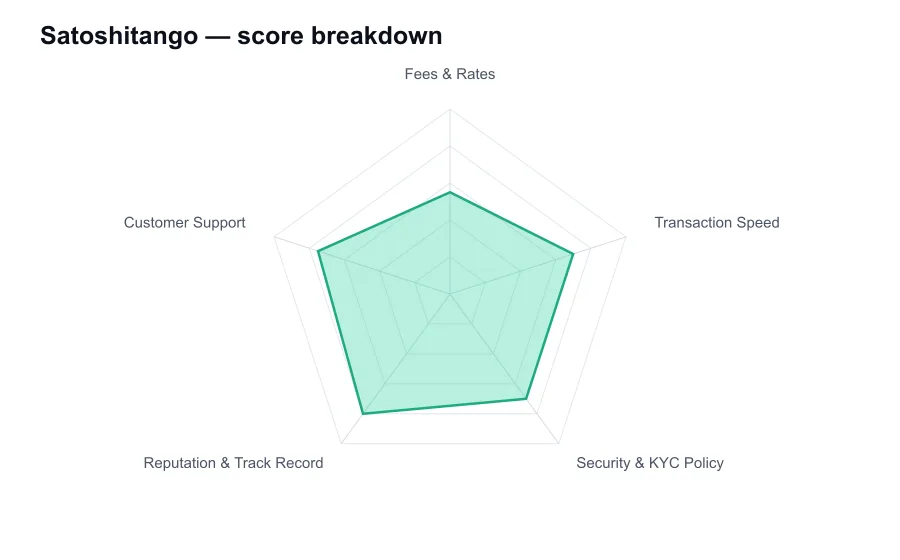
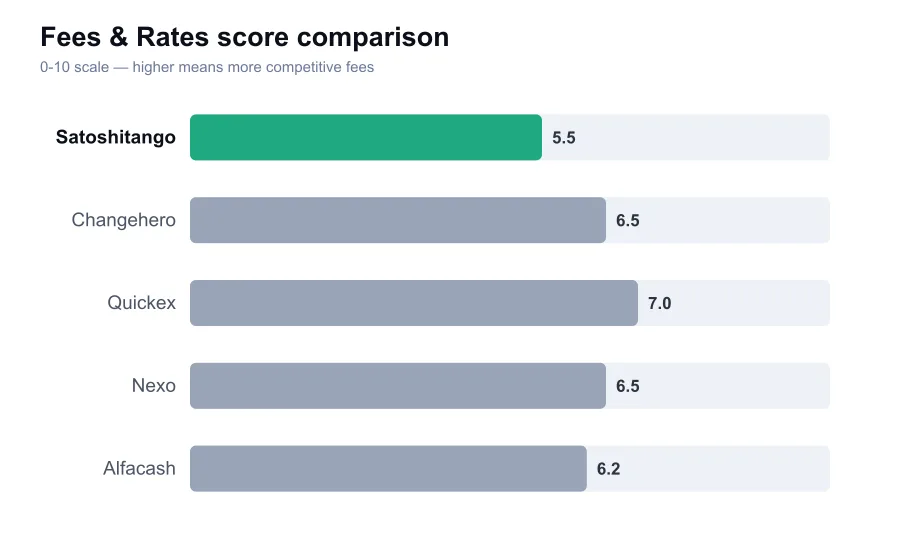
Fees require more scrutiny than the platform's simple interface might suggest. SatoshiTango publishes costs for many actions, but the effective price of a crypto purchase can include a trading charge, a payment-method cost, and a spread between the market rate and the quoted rate. Users funding through local payment methods should not assume that a visible zero-fee label means the purchase is costless. The final amount of USDT, BTC, or ETH received is what matters.
For frequent traders, this is not usually the cheapest venue. Major global exchanges can offer lower explicit spot fees and tighter liquidity on liquid pairs. SatoshiTango's convenience comes at a price, especially if a user repeatedly buys and sells small amounts. I would use it for local access and straightforward conversion, not for running an active trading strategy. A customer should always compare the quote against a reference market before confirming.
Withdrawal fees also deserve a check before funding an account. Network charges fluctuate, and centralized platforms sometimes add their own handling margin. That is normal, but it matters more on smaller withdrawals. Sending a modest amount of Bitcoin can be disproportionately expensive during busy network periods. Stablecoins on lower-cost networks may be more practical, provided both the sending and receiving wallet support the exact same chain.
Transaction speed is respectable for a local gateway. Internal crypto purchases are generally quick after funds are credited, while blockchain withdrawals naturally depend on network confirmations and compliance checks. Local bank transfers and payment methods can be faster or slower depending on the rail used and the timing of the deposit. Users expecting the near-instant responsiveness of a card app may be disappointed when a bank payment is pending outside business hours.
The platform is custodial, which means SatoshiTango holds the assets until a customer withdraws them. That gives users familiar account tools and a reset path for some access problems, but it introduces counterparty risk. Keeping money on an exchange for convenience is one thing. Treating a custodial balance as a long-term vault is another. I would withdraw meaningful long-term holdings to a wallet where I control the keys.
Identity verification is part of the deal. SatoshiTango requires KYC for account use and will ask for personal information and supporting documentation appropriate to its compliance obligations. That is not a flaw by itself. A local fiat-facing platform cannot realistically operate at scale while ignoring anti-money-laundering rules. Still, privacy-focused users should not expect the low-friction, wallet-only experience available at a decentralized exchange.
Security features such as two-factor authentication are important, but users should enable them rather than assuming an account is safe by default. Use an authenticator app where possible, create a unique password, and be suspicious of messages that imitate customer support. Crypto users in Argentina are frequent targets for phishing and social-engineering attacks. No exchange can fully protect someone who hands over a password or a one-time code.
SatoshiTango's record is better than that of many regional competitors simply because it has survived. A decade of operation through extreme volatility, changing local rules, and several crypto downturns gives it credibility. It has also built a recognizable local brand and has expanded services beyond a bare exchange interface. Yet longevity does not mean it has the balance sheet transparency or institutional standing of the largest international exchanges.
Its reputation is strongest among users who value access to Argentine peso rails and Spanish-language service. Outside Latin America, there is little reason to choose it over a larger platform with deeper books and broader product coverage. That is not an insult. Regional specialization can be valuable, but buyers should be honest about what they are paying for. They are buying local usability, not global-market efficiency.
Customer support is one of the more consequential differentiators for a local platform. SatoshiTango offers help resources and support channels in Spanish, which is a substantial advantage for customers who do not want to explain a payment issue to an English-only offshore desk. Response quality can still vary, especially during market surges or periods of heavier compliance review. There is no magic solution to a delayed bank transfer, but local context helps.
The app and web product are approachable enough for someone making their first stablecoin purchase. That simplicity has value in a country where users may be turning to crypto for practical currency protection rather than entertainment. I would still advise newcomers to learn the difference between custody on an exchange and custody in a personal wallet before moving meaningful funds. A convenient interface should not hide a serious financial decision.
SatoshiTango is a credible regional choice, but it is not a low-cost trading powerhouse. Its strongest case is a verified Latin American user who needs local rails, familiar language, and a straightforward bridge into Bitcoin or stablecoins. Its weak point is price transparency at the quote level, where spreads and payment costs can make a seemingly easy purchase more expensive than expected.
My take is favorable with limits. I would recommend SatoshiTango to Argentine users who prioritize reliable local access and have compared the final quote with alternatives. I would not recommend it to high-volume traders, privacy purists, or investors looking for the widest selection and lowest execution costs. It has earned trust through persistence, but users should still practice the basic discipline of checking fees and withdrawing long-term holdings.