Tiendacrypto occupies a very different corner of the market from the global exchange brands. It presents itself as a straightforward way for users in Argentina and the wider Spanish-speaking market to buy and sell crypto, rather than as a sophisticated trading terminal. The emphasis is accessibility, local payment habits, and a simpler retail experience. That can be valuable in a country where demand for dollar-linked crypto assets is often driven by practical savings and payment concerns rather than speculation.
The service should be judged as a local crypto retailer or broker, not as a Binance-style venue with deep order books, complex derivatives, and dozens of market pairs. That distinction matters because the price a customer sees is likely to reflect the provider's spread and payment-processing costs, rather than a transparent maker and taker commission on an exchange order book. For a newcomer, that can be easier to understand. For an active trader, it is usually less attractive.
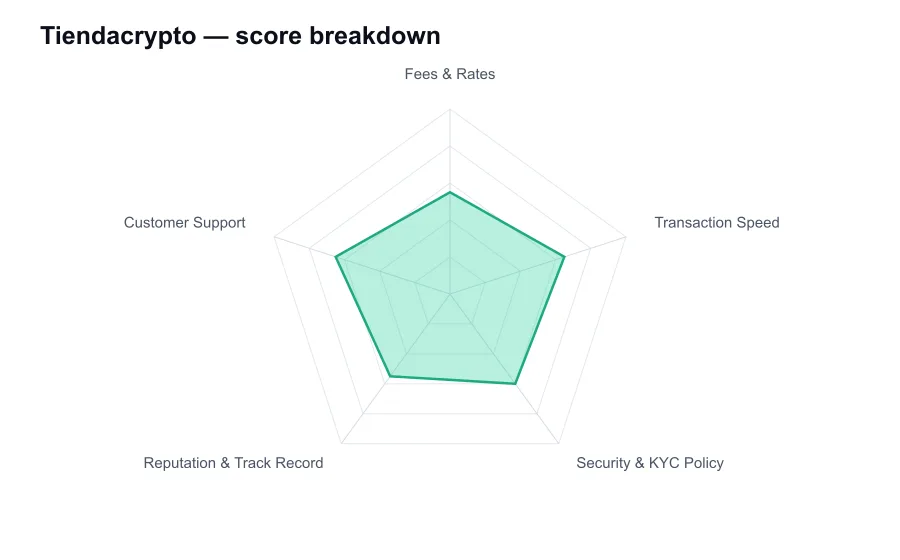
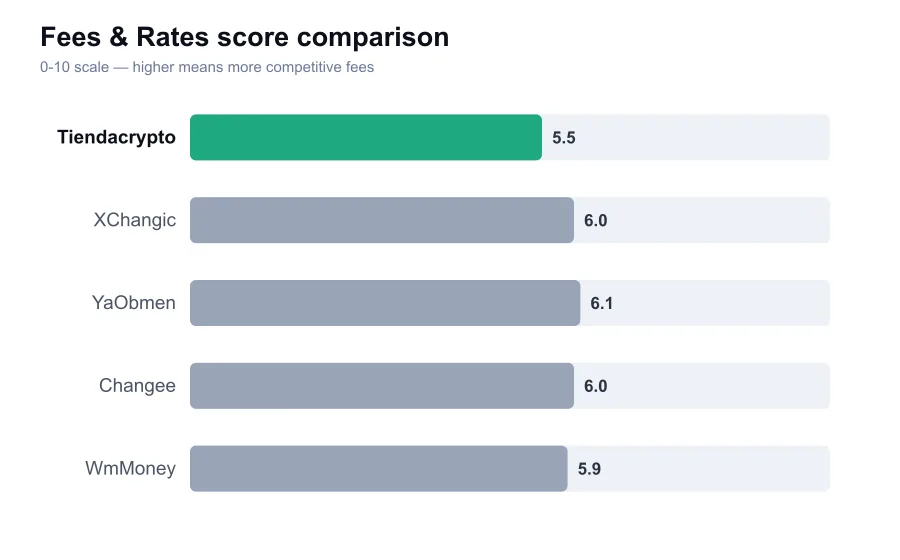
Fee transparency is the first area where Tiendacrypto needs close scrutiny. Retail crypto platforms often advertise that registration is free or that there is no separate commission, while earning through the buy and sell quote. That is not automatically dishonest, but it means comparing only a stated fee can be misleading. The right comparison is the final number of pesos required to buy a fixed amount of USDT, BTC, or ETH, then the amount received after any network withdrawal charge.
In practice, the quoted spread can be reasonable for a convenient local purchase, especially when the alternative is using a more complicated international exchange and arranging payment rails separately. It is less persuasive for frequent trading. A user making repeated buy and sell transactions can lose far more to the combined spread than they would pay on a liquid exchange with explicit low trading fees. Tiendacrypto is for acquiring or disposing of crypto, not for chasing small intraday price movements.
Local payment convenience is one of its better arguments. Argentine users often care less about an elegant charting package and more about whether a service accepts familiar local transfer methods, explains the price in pesos, and processes the order without forcing them through a foreign banking setup. A platform built around that reality can be more useful than a larger exchange that technically accepts users but makes deposits awkward.
Speed depends heavily on the payment method and the asset selected. A domestic bank transfer or instant payment confirmation can allow a broker order to be processed quickly, sometimes in minutes during normal operating conditions. Blockchain withdrawals are different. They depend on the network, security checks, and any manual review. Bitcoin may take considerably longer than a low-fee chain, and a same-day expectation is sensible rather than assuming every transaction is instantaneous.
There is an important trade-off in the simple purchase flow. A fixed or near-fixed quote can protect a customer from watching an order book move while they try to place an order, but it can also include a wider cushion for the provider. Before clicking confirm, check how long the price is locked, whether the quote can change after payment, and what happens if the payment reference is entered incorrectly. These details are where a retail exchange proves whether it is genuinely user-friendly.
On identity checks, Tiendacrypto should not be treated as an anonymous swap service. Providers handling local fiat payments generally have anti-money-laundering obligations and may request personal identification, tax or address information, source-of-funds evidence, or additional verification based on transaction size. That is a normal feature of fiat-facing crypto services, although the exact requirements can change with regulation and internal risk policies. Anyone unwilling to complete KYC should use a different type of product.
The security model also requires a sensible attitude. If Tiendacrypto holds customer crypto before withdrawal, users are accepting counterparty risk in addition to the usual account-security risks. Strong passwords, unique credentials, and two-factor authentication are basic precautions. More importantly, long-term holdings should not sit on a retail platform merely because they were purchased there. Withdraw to a wallet you control if the assets are not needed for an immediate sale.
Public information around smaller regional providers is rarely as extensive as it is for publicly listed exchanges. That does not prove a company is unsafe, but it limits what an outside reviewer can independently verify. Tiendacrypto does not have the long international operating record, independently reported reserves, or institutional scrutiny associated with names such as Coinbase, Kraken, or Bitso. Its local focus is a strength for service design, but it also means customers should perform their own basic due diligence.
A sensible due-diligence routine is boring but effective. Verify the web address before sending money, read the current withdrawal rules, check the legal entity and local terms, and make a small first purchase. Do not rely on a social-media account, a sponsored influencer post, or a screenshot of a successful transaction. Crypto scams often imitate legitimate local brands, particularly around bank-transfer instructions.
Customer support matters more at a local broker than many people expect. A failed card payment, an unmatched bank transfer, or a delayed withdrawal is not something a chart or FAQ can fix. Tiendacrypto's Spanish-language orientation is an advantage for its intended audience, and clear local-language help can beat a global exchange's translated template. Still, users should not assume 24-hour live support or instant human intervention outside business hours unless the current support policy says so.
The available crypto selection is likely to be narrower than a major global exchange, and I think that is often a sensible choice. A retail gateway does not need hundreds of illiquid tokens. What matters is dependable access to the assets people actually use, particularly Bitcoin, Ether, and stablecoins, plus a reliable withdrawal process. The danger appears if the platform's limited selection is paired with a wide spread and insufficiently clear network information.
Tiendacrypto makes the most sense as a local on-ramp and off-ramp. It can be convenient for someone paid in pesos who wants to acquire a mainstream digital asset without mastering exchange order books. It is not the place I would recommend to a professional trader, an altcoin collector, or someone who needs audited proof-of-reserves reporting. Convenience is its product. Users should make sure they are not paying too much for that convenience.
My take is cautiously practical. A local service that understands Argentine payment behavior can solve a genuine problem better than a global platform designed elsewhere. But smaller providers earn trust transaction by transaction, and Tiendacrypto's pricing should be checked against alternatives every time, especially for larger orders. Use it for a clear, limited purpose, verify the quote and withdrawal terms, and move long-term crypto to self-custody.