XChangic is positioned as an online currency exchanger rather than a full cryptocurrency marketplace. Its audience is people who want to move between digital assets, electronic money services, and local payment methods without navigating the machinery of a trading exchange. That focus gives it a cleaner purpose than many sprawling crypto sites. You choose a pair, provide payment details, and follow an order through to completion. The experience can be convenient, but convenience is not the same as low risk.
The service makes most sense for users who already know exactly what they need to exchange. If you need to buy a particular coin, send it to a wallet, or convert a payment-system balance to another method, the direct form is easier than funding an exchange account and placing several trades. It is not designed for people researching markets. There is no reason to expect professional charting, deep liquidity information, or the custody protections associated with a large centralized platform.
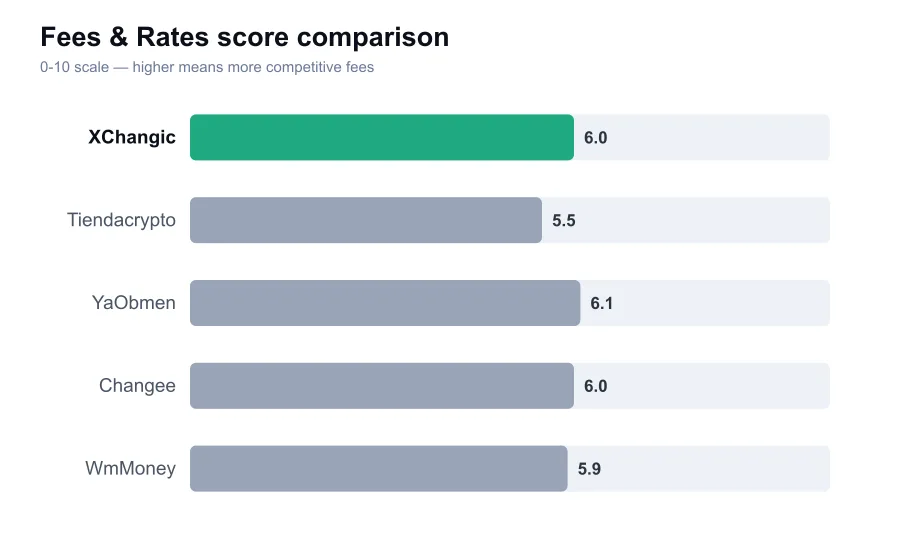
XChangic's rates need to be judged as all-in prices. Like many exchangers, it is the difference between what you send and what you receive that matters, not a prominent trading commission. The visible quote may incorporate the service margin, reserve costs, payment processor risk, and network expenses. That can be perfectly fair, but only if the customer does the comparison work. A rate that was good ten minutes ago may not be good by the time an order is created.
The best habit is to check the exact payout for the same amount across a few reputable alternatives. Do this immediately before creating the order, because crypto prices and reserve conditions move quickly. The difference is often most noticeable with card-like rails, cash-out methods, or assets with higher on-chain fees. For a user converting a small amount, the simplicity might justify a weaker rate. For a larger order, even a modest percentage gap is enough reason to keep shopping.
Fixed and floating quotes should not be treated as interchangeable. A fixed quote can offer certainty during the payment window, but only if the payment arrives in full and on time. A floating quote exposes the final result to market movement and confirmation timing. Read the order terms instead of assuming the number on screen is guaranteed forever. This matters especially for Bitcoin transfers during busy periods, where confirmation delays can materially change a floating-rate order.
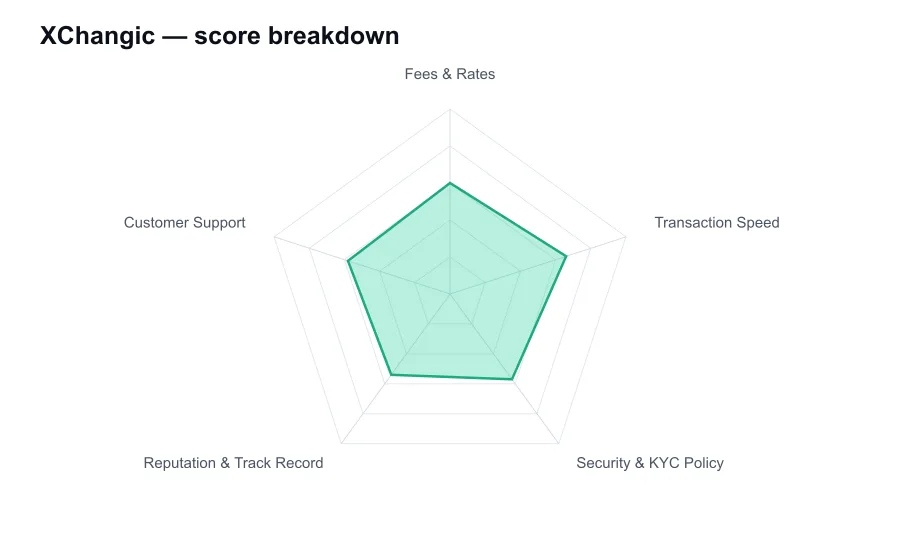
Transaction speed is respectable only in the context of the route being used. A crypto payment sent on a low-fee or congested network may take a while to reach the required confirmation threshold. The exchanger cannot release an outgoing payment before it has confidence that the incoming funds are settled. In a clean crypto-to-crypto transaction, the human part of the process may be fast. The chain is usually the slower part, and customers sometimes blame the wrong party.
Manual payment methods are another matter. Transfers involving banks, e-wallets, or fraud-sensitive payment rails may require an operator to verify receipt. Weekends, provider outages, mismatched sender names, and incomplete reference details can all slow the process. XChangic is better used for flexible personal transfers than for paying an invoice with a hard deadline. If timing is critical, ask support about the exact direction before you place an order, then preserve their reply.
KYC is where marketing expectations frequently collide with reality. A streamlined exchanger may not require everyone to register, yet it can still pause a transaction and request documents if its compliance system identifies a concern. Users should not confuse fewer sign-up screens with immunity from verification. This is especially important for people using funds from third-party accounts, newly created wallets, or payment methods that are frequently associated with fraud disputes.
That policy is not automatically a flaw. Sensible transaction monitoring protects the service from being abused. The issue is predictability. A good provider explains what may trigger a review, what documents it can request, and how a pending case will be handled. If those rules are vague, the user bears more uncertainty. I would not send XChangic an amount that I urgently need elsewhere until I had seen it complete at least one smaller order without complications.
The company does not have the same visibility, licensing footprint, or years of mainstream scrutiny as Coinbase, Kraken, or Bitstamp. It should therefore be assessed as a specialist exchanger, not as a substitute for a heavily regulated custodial venue. That is not an insult. Plenty of smaller exchangers serve real customer needs well. It simply means reputation research matters more, including recent independent feedback, exchange-monitoring listings, and the consistency of responses to public complaints.
Watch for the quality of negative feedback rather than merely counting stars. A complaint about a delayed transaction can be routine if blockchain evidence shows the customer paid late. A pattern of unexplained rate changes, unanswered tickets, or prolonged verification holds is much more serious. The same standard applies to praise. One fast swap proves that a single order worked. It does not prove reserve depth, policy consistency, or reliability under pressure.
Support is not a bonus feature for XChangic. It is part of the product. The crucial test is whether a customer can provide an order number and receive a clear explanation of status, required action, and expected next step. Generic assurances are no help when funds have already left a wallet. Before using a larger amount, check the listed support channels and send a basic question. A prompt, specific response is a useful signal, though not a guarantee.
I also recommend avoiding unnecessary complexity. Send only from a wallet or account in your own name where possible, do not split an order unless instructed, and do not alter the payment amount. Keep the transaction hash and screenshots. These steps sound mundane, but they eliminate many of the problems that turn an ordinary exchange into a long support thread. With direct exchangers, accuracy is part of security.
XChangic is a reasonable option for a user who has found a competitive live quote and understands the mechanics of a non-custodial-style conversion. Its strengths are speed of access and a purpose-built exchange flow, not transparent institutional pricing or expansive consumer safeguards. I would be comfortable considering it for a small, well-researched transaction. For recurring purchases, serious trading, or high-value conversions, I would choose a provider with deeper liquidity, more public accountability, and clearer compliance disclosures.