Symbiosis is not a conventional cryptocurrency exchange. It is a cross-chain liquidity protocol built for people who want to swap assets between networks without manually bridging tokens, changing wallets, and visiting several decentralized exchanges. Its strongest appeal is practical: a user can move value between chains such as Ethereum, BNB Chain, Arbitrum, Polygon, Optimism, Avalanche, and other supported networks through one interface. That puts it closer to Li.Fi, Rango, and Socket than to a centralized venue such as Kraken.
The product has always made most sense for experienced DeFi users. If you already understand gas, token approvals, wallet signatures, slippage, and the difference between a native asset and a wrapped version, Symbiosis can remove several irritating steps from a cross-chain trade. Someone who just wants to buy Bitcoin with a bank card will find it completely unsuitable. There is no familiar account dashboard, no fiat balance, and no customer-service-led onboarding.
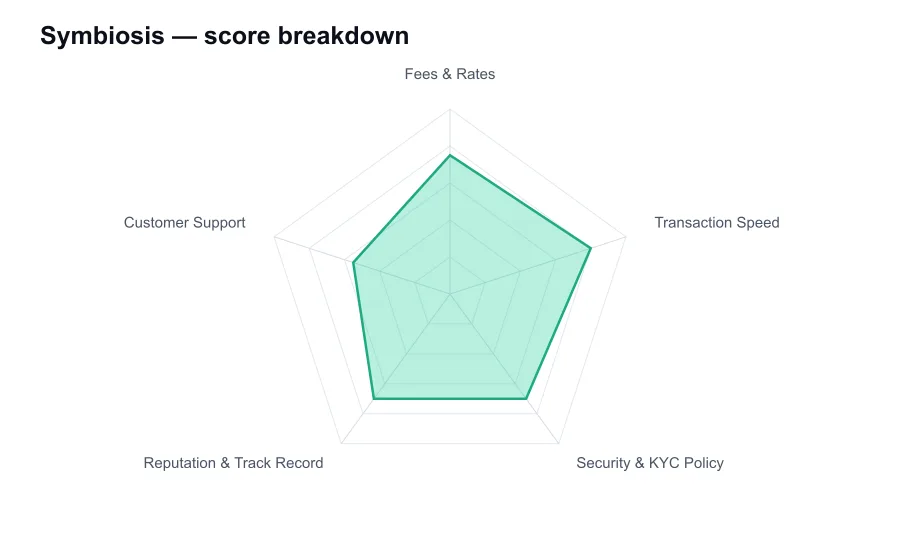
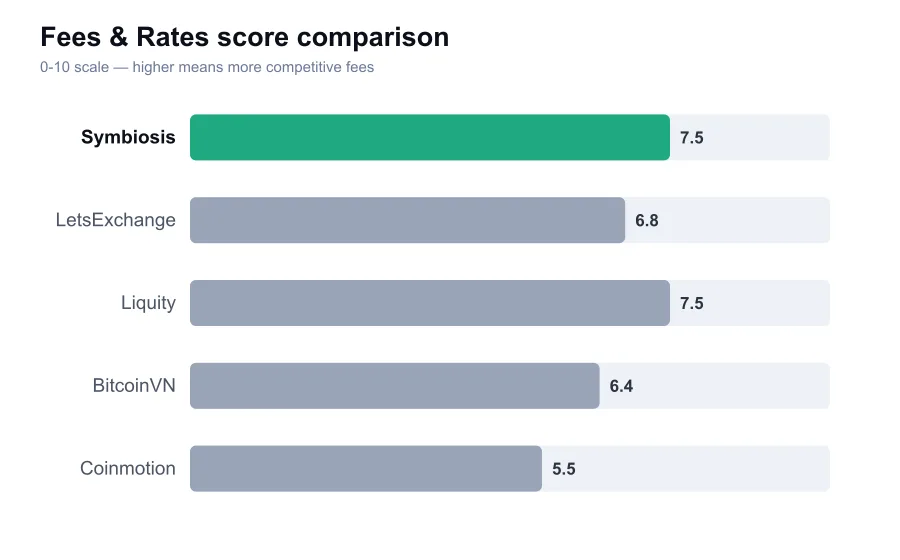
Its pricing is harder to judge than a simple exchange fee because a transaction can contain several costs at once. There may be a Symbiosis protocol fee, liquidity-provider pricing, the spread embedded in the route, and gas fees on one or more networks. The protocol has advertised low fees, often around 0.1% for swaps or cross-chain operations, but that number alone does not tell the whole story. A cheap-looking route can become expensive if Ethereum gas is high or the liquidity path is thin.
That is the central weakness in the fee story. Symbiosis is generally competitive for swaps involving lower-cost networks, particularly where it can avoid an expensive series of separate bridge and swap transactions. It is less compelling for small Ethereum mainnet transfers. Paying two mainnet gas fees to move a modest amount of stablecoins can wipe out any saving from the protocol's low headline fee. Users should inspect the final quote, not just the percentage shown near the swap form.
For common stablecoin routes, execution can be very quick. Transactions on chains such as BNB Chain, Polygon, Arbitrum, Base, or Optimism usually confirm in seconds or a few minutes, and the destination-side swap often follows promptly once the source transaction is final. That feels dramatically better than an old-fashioned bridge that leaves funds in limbo for twenty minutes. Still, Symbiosis cannot make blockchains faster than they are, and congestion or finality delays can slow a route down.
The protocol's more ambitious design is its cross-chain AMM model. Rather than asking a trader to bridge first and swap later, it tries to combine those actions into a single intent. This is genuinely useful. It reduces the chances of sending funds to the wrong chain, forgetting to add a token contract, or ending up with a bridged asset that has poor liquidity. The convenience is real, although users should remember that convenience also means trusting more smart-contract and routing logic.
Security here is about software architecture rather than a company holding your account balance. Symbiosis is non-custodial in the usual DeFi sense: users connect a self-custody wallet and authorize transactions from it. There is no routine identity verification or KYC process for on-chain swaps. That is attractive for privacy-minded users, but it also means no one can reverse a bad transaction, recover a compromised wallet, or freeze funds after an error.
The project has published audit information and has been through multiple security reviews, which is better than treating a bridge as a black box. Yet an audit is not insurance. Cross-chain systems have historically been among the most heavily attacked parts of crypto, because they combine smart contracts, liquidity pools, validator or relayer assumptions, and multiple chains. Anyone moving a substantial balance should test the exact route with a small amount first, even if they have used the protocol before.
Symbiosis has a meaningful history in the multichain DeFi market and has survived several difficult market cycles, which counts for something. It is not a fly-by-night swap widget. The project has an established token, SIS, integrations across a broad range of networks, public documentation, and a visible community presence. It does not have the institutional reputation of Coinbase or the long operational history of Uniswap, but it is recognisable to active cross-chain users.
Its reputation is also more niche than its marketing can imply. Liquidity and route quality vary by pair. A popular USDC route may be smooth and economical, while a small-cap token transfer can expose weak depth, a noticeably worse rate, or limited destination options. Symbiosis is best treated as a routing tool, not a guarantee that every imaginable token can be moved cheaply between every chain.
Support is available primarily through documentation, community channels, and ticket-style contact routes rather than a phone line or a polished bank-grade help desk. The documentation covers wallet connection, failed transactions, supported assets, and route mechanics reasonably well. The problem is that bridging failures are often technical and time-sensitive. A user staring at a pending transaction may want a direct answer, while a Discord response can take time and may depend on moderators rather than a dedicated support agent.
The interface itself is one of Symbiosis's better qualities. It is cleaner than many bridge dashboards and normally presents the asset received, estimated time, price impact, and network costs before a user signs. That does not excuse skipping the details. Check the destination token, check whether the amount is enough to pay gas on arrival, and do not approve unlimited spending allowances unless you understand why the wallet requests them.
Compared with aggregators, Symbiosis can be excellent on routes it handles internally, particularly stablecoin movement between inexpensive chains. Li.Fi and Rango may offer a wider menu of aggregators and bridges, while Across can be simpler for certain supported routes. Symbiosis earns its place by making a complicated task feel like a normal swap. It loses points where its liquidity, route coverage, or fee visibility falls behind a broader aggregator.
My view is that Symbiosis is a capable specialist, not a universal crypto exchange. It is a good choice for a DeFi-native user moving moderate amounts between supported networks, especially stablecoins, who is willing to verify each quote. It is the wrong place for beginners, fiat buyers, or anyone who needs human support to resolve a transaction quickly. The protocol's utility is substantial, but cross-chain convenience should never be mistaken for cross-chain risk disappearing.