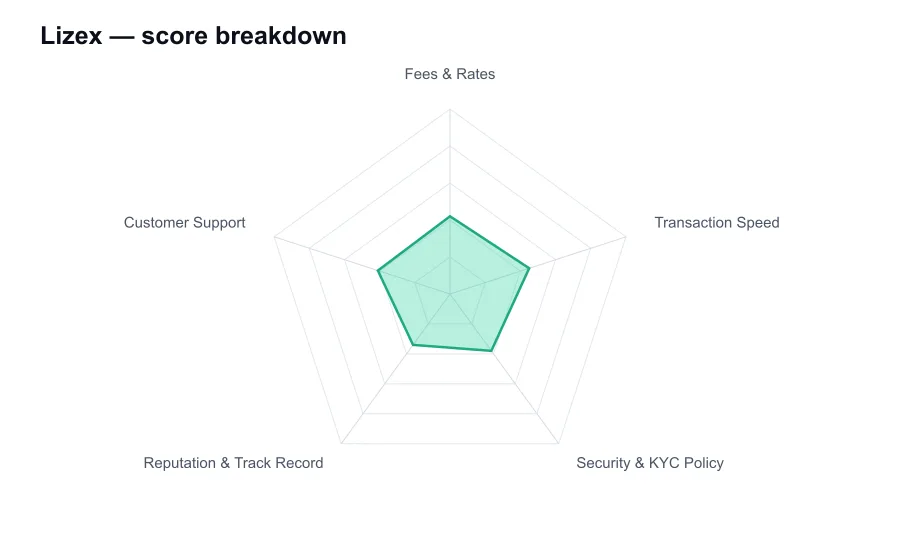
Lizex is a far less established name than the major global exchanges and that fact should shape the review before any discussion of its interface or promotional rates. The brand presents itself in the crypto exchange space, but it does not have the dense public record, broad independent coverage, or easily verifiable operating history that allows a reviewer to speak with the same confidence used for Kraken, Coinbase, or even long running instant swap firms. A cautious reader should start there, not at the sign up button.
Small exchange brands can be perfectly legitimate, and a lack of fame is not evidence of wrongdoing. Crypto has room for regional venues and niche services. The issue is verification. Before depositing money, a user should be able to identify the legal operator, jurisdiction, applicable terms, compliance contact, security controls, withdrawal rules, and a meaningful support route. If any of those details are vague, inconsistent, or difficult to find, the right response is to reduce exposure, not to assume the gap will be harmless.
Lizex appears aimed at users looking for a relatively simple way to buy, sell, or exchange digital assets rather than professional traders who need institutional grade tooling. That can be a valid market position. A clean website and a short onboarding path are useful only after the fundamentals check out. Attractive design is cheap. Reliable custody, deep liquidity, and competent incident handling are expensive, which is why established exchanges spend years proving they can provide them.
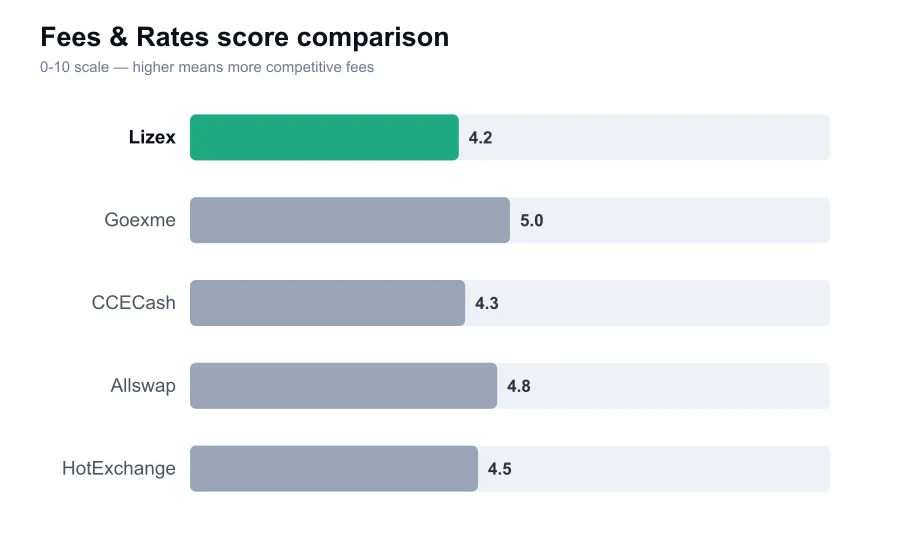
Fee transparency is where thinly documented platforms often disappoint. A platform may advertise low or zero trading fees while recovering revenue through a wide spread, a poor conversion quote, withdrawal charges, card processing costs, or conditions buried in the terms. I have not seen the level of consistently accessible, independently corroborated fee documentation that would justify treating Lizex's pricing as highly predictable. Do not send funds based on a banner. Find the exact fee for your pair, payment method, and withdrawal network before proceeding.
The practical test is simple. Compare the total amount you pay and the net amount you can withdraw against a major venue at the same moment. For a purchase, include card charges and the difference between market price and execution price. For a sale, include the spread and any cashout fee. For a crypto withdrawal, check the fixed charge, minimum withdrawal, and whether the destination network is supported. If Lizex cannot make these numbers clear before deposit, it fails a basic standard of exchange usability.
Transaction speed also needs separating into parts. A website can show a completed internal trade instantly while the important part, your withdrawal, remains pending. Fiat deposits can depend on payment processors, crypto deposits depend on blockchain confirmations, and withdrawals depend on internal risk controls plus the destination chain. Without a robust public record of service performance, there is no good basis for promising a typical Lizex withdrawal time. Treat any time estimate as provisional until you have tested it yourself.
That test should be small. Deposit the minimum practical amount, make one trade if required, and withdraw to a wallet you control. Record the timestamps and fees. A platform that processes a modest test cleanly has passed one useful check, not every check. Do not immediately scale to a large balance. Problems involving compliance holds, banking delays, liquidity limits, or manual withdrawal review often appear only after an account has sent materially more money.
Security claims require the same discipline. Unless an exchange provides credible evidence of cold storage practices, access controls, security audits, insurance limitations, incident history, and a clear explanation of who holds customer assets, generic statements about safety mean very little. I could not give Lizex the same security confidence I would give a transparent, heavily scrutinized exchange purely from branding. Users should enable every available security control, especially two factor authentication, unique passwords, and withdrawal address protection if offered.
KYC and privacy policy should be read before money moves. A platform may allow browsing or limited registration without full verification, yet require identity documents for fiat transfers, higher limits, withdrawals, or an AML review. That is normal in regulated crypto. What matters is whether the policy states this clearly, describes document handling, and gives a realistic escalation path. A surprise request after a deposit is a common source of complaints across the industry, and obscure platforms provide fewer external signals about how fairly those cases are resolved.
Custody is the largest unresolved concern with Lizex. Any centralized platform holding your coins has counterparty risk. That risk is manageable at a well capitalized, transparent venue with established controls, but it is harder to quantify at a small provider with limited independently verifiable information. Leaving long term holdings there would be a bad decision. If you choose to use Lizex at all, treat it as a transaction point and withdraw assets promptly to a self controlled wallet.
Reputation cannot be manufactured by a handful of testimonials, social posts, or affiliate pages. A strong exchange reputation is built through years of withdrawals in bull markets and bear markets, public handling of outages, regulatory disclosures, meaningful customer feedback, and clear accountability when things go wrong. Lizex does not currently have that level of visible track record. That does not prove it will fail a customer. It does mean its reputation score must be conservative until more independently verifiable evidence exists.
Customer support is especially important at a newer or less visible platform because users may need help with verification, delayed withdrawals, or account access. Look for a functioning support center, a clear ticket trail, and contact details connected to the legal operator rather than only a chat bubble. Fast friendly replies to a pre sales question are not the same as competent support during a frozen withdrawal. I would test support with a specific operational question before funding an account, then judge the answer for clarity rather than speed alone.
There is a common temptation to interpret a lesser known exchange's promotional offer as compensation for its risk. It rarely is. A slightly better rate, a bonus, or a flashy token listing does not compensate for unclear custody arrangements or weak public accountability. Crypto users have learned this lesson repeatedly. The best defense is boring: use a reputable primary venue, keep trading balances low, verify every withdrawal path, and refuse to let fear of missing out replace due diligence.
My assessment of Lizex is deliberately guarded. It may be usable for a small, carefully tested transaction if the user can independently verify the current operator, terms, security options, and fee schedule. It has not earned a recommendation for large deposits, long term storage, or urgent transactions where dependable support is essential. There are too many better documented alternatives. Until Lizex offers substantially stronger public transparency and builds a longer observable record, caution is not pessimism, it is the rational default.