UAchanger is a Ukrainian online exchanger built for a fairly practical job, moving between crypto, e money systems, bank cards, and local hryvnia payment rails without asking the customer to learn a trading terminal. It belongs to the long running BestChange style of exchange service, where users compare a quoted rate, create an order, pay into a displayed account, and wait for an operator or automated processor to complete the return leg. That is a different product from Binance or WhiteBIT. It is convenience led, not market led.
The service's strongest appeal is its range of payment directions for users in Ukraine and neighboring markets. A person needing to turn USDT into a Ukrainian bank card balance, or exchange one electronic money balance for another, can often find a route that a large international exchange does not make convenient. That local usefulness is real. It is also why UAchanger has continued to attract customers despite a crowded field of small exchangers.
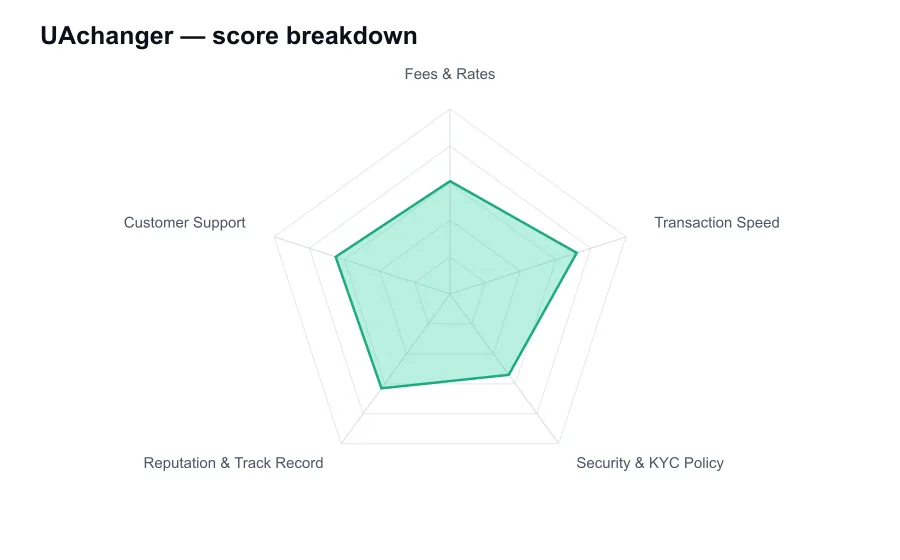
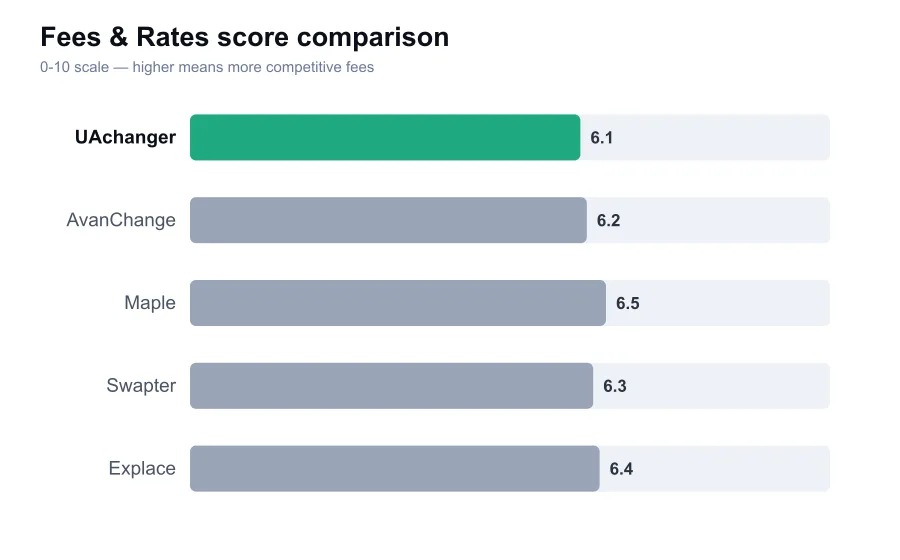
Its site presents the quote before an order is created, which is the minimum standard for this business and still matters. The rate normally includes the service's margin rather than showing a neat trading fee on a separate line. That makes the headline offer easy to understand, but it makes direct price comparison essential. A rate that looks free of commission can still be expensive once the buy and sell spreads are compared with the wider market.
For modest exchanges, UAchanger's pricing can be reasonable if its reserve is healthy and the direction is popular. Stablecoin to card routes are often where such services are most competitive. Less common electronic currency pairs and small reserve directions can be much less attractive. The customer isn't buying exchange execution at an open market price, they are accepting a dealer's inventory price. Treat it like a currency booth, not like spot trading.
Minimums and maximums deserve more attention here than they do at a big exchange. Each direction has its own reserve, and the amount displayed on the order page can determine whether the exchange is available at all. Larger orders may require a manual confirmation or a split settlement. Anyone moving a meaningful amount should ask the operator about the available reserve before sending funds, rather than assuming a listed direction can absorb any size.
Speed is good when the transaction is a straightforward, well funded crypto order. Blockchain confirmation is usually the real limiting factor for incoming assets, and a completed payment can then be processed within minutes to an hour. Card and bank payouts are more variable. Ukrainian banking rails can be quick, but card issuer checks, bank maintenance windows, and manual anti fraud review can turn a seemingly simple order into a longer wait.
The fixed rate option needs careful reading whenever it is offered. A fixed quote protects the customer only within the stated payment window and under the exact payment conditions shown in the order. Sending the wrong amount, paying after a rate window expires, or using an unexpected sender name can move an order into manual handling. That isn't unique to UAchanger, but users regularly mistake an exchange form for an unconditional promise.
Security at this type of provider is mostly operational rather than institutional. UAchanger does not offer the segregation, proof of reserves, regulated custody framework, or account security controls associated with a major exchange. The user transfers money to the service for a one off conversion. That means the main protection is verifying the official domain, checking the recipient details displayed after creating the order, and never accepting changed payment instructions from a messenger account.
The service may request identity information or additional documents for transactions that trigger compliance controls. That is sensible in principle, particularly where card payments or suspicious blockchain exposure are involved, but it is not the same thing as a transparent, published onboarding regime. A customer seeking guaranteed no document exchanges should not assume every order will qualify. A customer who needs a formal corporate compliance trail should choose a regulated platform instead.
UAchanger's reputation is best viewed through its long presence in the regional exchanger ecosystem rather than through the kind of public financial disclosure one can assess at a large exchange. Directory feedback can be useful for spotting repeated problems such as delayed payouts or disputed rates. It cannot independently prove solvency or cybersecurity maturity. Positive reviews are a signal, not an insurance policy.
I would be more comfortable using UAchanger for a normal personal conversion than for holding funds between transactions. The service model gives the customer little reason to leave a balance there, and little upside for doing so. Create the order, send the exact amount, receive the output, and move on. That discipline reduces exposure to both operational error and counterparty risk.
Support is available through the contact channels shown on the service's website, and this is where a smaller exchanger can either save an awkward order or make it miserable. For ordinary orders, responsive human communication matters more than a glossy help center. UAchanger generally looks set up for order based assistance rather than comprehensive self service. Save the order number, transaction hash, screenshots, and payment receipt before opening a request.
The weak point is that support quality is difficult to test until something has gone wrong. A fast answer to a simple status question is encouraging, but it does not tell a user how a contested payment, a frozen card transfer, or an accidental wrong network deposit will be handled. There is no substitute for making a small first transaction. That advice may sound cautious, but it is the right way to approach every independent exchanger.
Compared with WhiteBIT, UAchanger is far less suitable for active trading, recurring crypto purchases, or anyone who wants advanced account controls. Compared with a pure wallet swap tool, it can be more useful for regional cash out routes and electronic payment systems. Its niche is clear: a bridge between payment ecosystems that don't always connect smoothly.
My view is that UAchanger can be a useful local conversion desk, provided the user shops the rate and treats it as a transactional service rather than a place to store wealth. The experience can be quick and uncomplicated for common directions, but the opaque all in spread and limited institutional transparency cap its appeal. Start small, check the reserve, and keep records. That is not paranoia, it is basic good practice with a service in this category.